
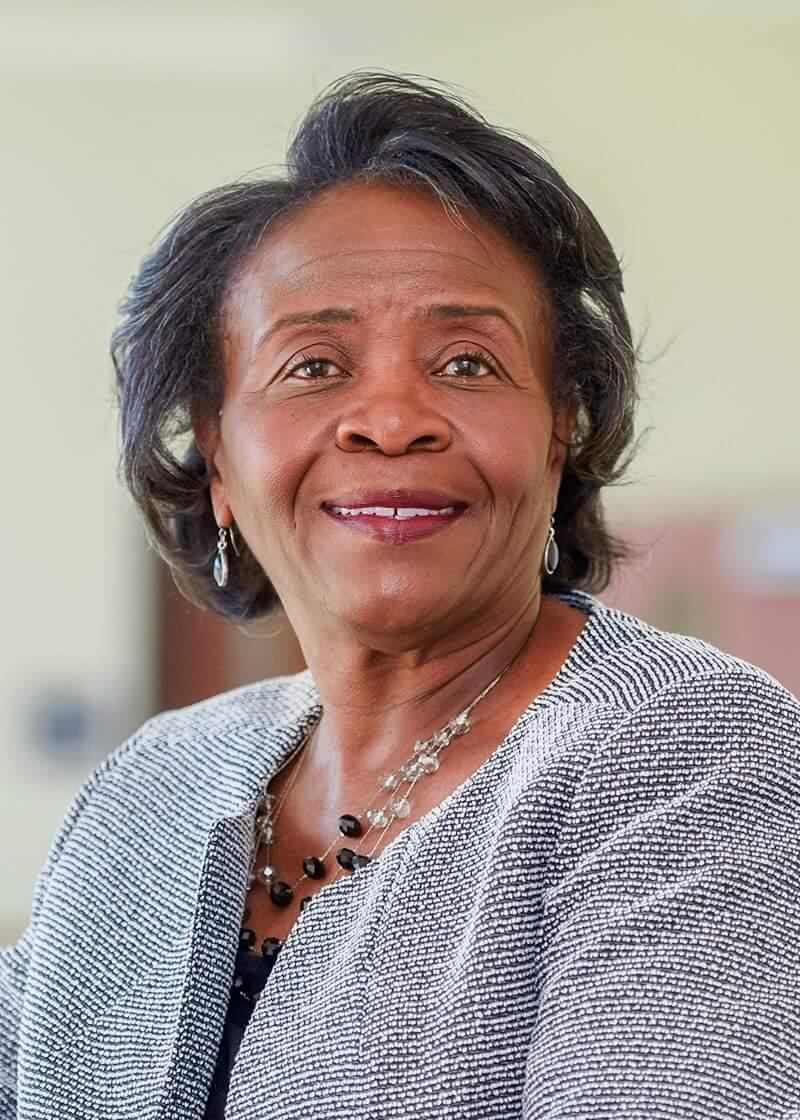
Prof. Martha Morgan is Robert S. Vance Professor Emerita of Law at the University of Alabama School of Law, where she joined the faculty in August 1979 and has held emerita status since fall 2005 . She earned her J.D. at the George Washington University National Law Center, where she was elected to Order of the Coif, and her B.S. at the University of Alabama, where she was elected to Phi Beta Kappa . After law school she clerked for Federal Judge James R. Miller, Jr. of the District of Maryland and worked as an attorney for the Equal Employment Opportunity Commission before entering teaching .
Her teaching for many years centred on constitutional law and civil rights, and her research later shifted toward comparative constitutional law and women's international human rights . She is credited with pioneering research on women as 'founding mothers' in Latin American constitution-making , work that began with her 1990 *Boston University Law Review* article on women's voices and stories in the 1987 Nicaraguan Constitution and continued through studies of the 1991 Colombian Constitution and Costa Rican constitutional jurisprudence, much of it co-authored with Latin American scholars such as Alda Facio and Mónica María Alzate Buitrago . Colleagues describe her as a genuinely bilingual comparativist who reads constitutional texts in the original and treats foreign and international law as sources of reform rather than decoration .
She has also been a practising lawyer throughout her academic career, in the specific sense that she has litigated what she teaches. For years she volunteered as one of the attorneys for plaintiff schoolchildren in litigation challenging the inadequacy and inequity of Alabama's public school system, and she later served as counsel in the *Lee v. Macon County* (Pickens County) desegregation case, as well as working on state constitutional revision concerning public education and the declaration of rights . Her article *Establishing Education Program Inadequacy: The Alabama Example* (1995), written with Adam Cohen and Helen Hershkoff, grew directly out of that representation . She is a charter member of the board of the Equal Justice Initiative and has served on both the national and Alabama boards of the ACLU .
Since retirement she has worked as a consultant and trainer for international women's rights organisations , IWRAW-AP, the Women's Human Rights Education Institute at the University of Toronto, and Fundación Justicia y Género in Costa Rica , and she remains active in Alabama on public education rights and constitutional reform . In December 2020 the National Center for Law and Economic Justice presented her with a Leaders in Social Justice Advocacy award alongside Henry Sanders and Faya Rose Touré, recognising her work fighting for Black communities and low-income people in Alabama .
Prof. Morgan belongs to a small category of legal scholars who have litigated the doctrine they write about. The Alabama school-funding litigation was not a footnote to her scholarship; it produced the article. That sequence , client, then argument, then published analysis , gives her writing a quality that purely doctrinal work often lacks: she knows which arguments a court will actually entertain and which are merely available in the abstract.
Her comparative work is the other half of her contribution. At a time when most American constitutional scholars treated foreign constitutions as curiosities, she was reading Nicaraguan, Colombian and Costa Rican materials in Spanish and asking what US lawyers could learn from them. Her 'founding mothers' research is now a recognised line of inquiry in comparative constitutionalism, and it was largely hers to open.
Legal manuscripts fail in recognisable ways: a case is cited for a proposition it does not hold, a comparative claim rests on a translation rather than the text, or a doctrinal step is asserted where the jurisdiction has not taken it. Prof. Morgan has spent a career reading statutes and constitutions closely enough to catch exactly those errors, and she brings that discipline to the manuscripts APC reviews.
The APC Leadership Team American Publication ConsultantsTell us about your manuscript and we will match you with the right expert from our team.
Get A Free Quote